Monday, 27 October 2014

POWER YOUR DIET WITH GRAPE FRUIT


  GRAPE FRUIT


     Delicious grapefruit is rich on phytonutrients such as  lycopene, vitamin A, and beta-carotene. The fruit is well known as "fruit from the paradise" for its unique health-promoting as well as disease preventing properties, especially among the health-conscious, fitness enthusiasts.

       Grapefruits speed up your metabolism and help burn a lot of calories. This fruit will help you feel full  faster and longer with fewer calories. Moreover, grapefruit is rich in fiber that may help stabilize your  blood glucose levels. You can add grapefruit to your fruit salad, smoothies or drink a grapefruit juice.

     Red varieties of grapefruits are especially rich in the most powerful flavonoid antioxidant, lycopene.  Studies have shown that lycopene protects skin damage from UV rays, and offers protection against  prostate cancer.  It contains moderate levels of B-complex group of vitamins such as folates,  riboflavin, pyridoxine, and thiamin in addition to some resourceful  minerals such as iron, calcium,  copper, and phosphorus.

    DIET TIPS:  

   Eat protein at every meal.


Thursday, 16 October 2014

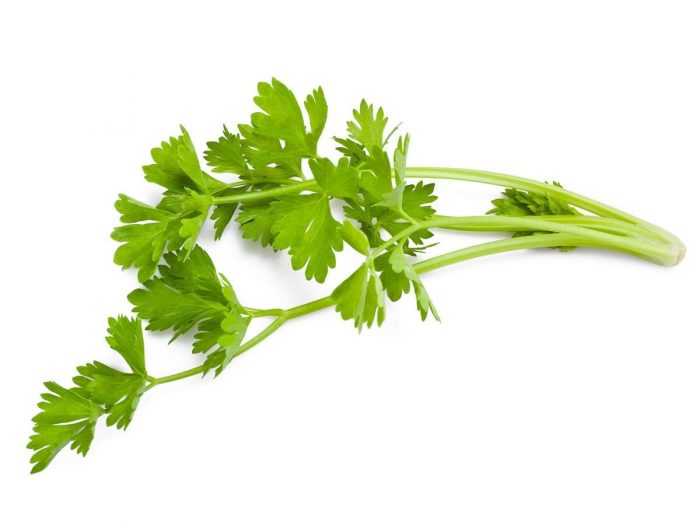
BENEFITS OF CELERY IN WEIGHT LOSS


CELERY


celery

The secret of celery is very simple: it contains less calories and helps burn more than the 

amount of food youeat. Celery mostly consists of water that’s why it is good as a part of a 

balanced diet.

However, this food is not suitable for celery diet only as your body won’t get the necessary

 minerals and nutrients. So the best decision will be to combine it with some other foods. The

 low caloric content of celery makes it a popular choice for dieters, and it is also rich in 

vitamins K and C. The stalks taste best at the peak of the season, in the summer.

HEALTH BENEFITS:

Regular drinking of celery juice before meals may help you to reduce your weight. 

This is because celery is very low in calories, but it is very filling because of the fibre content.

It  helps you to be tempted to over eat

Celery is an important food source of conventional antioxidant nutrients, including vitamin C, 

beta-carotene, and manganese. But its "claim to fame" in terms of antioxidant nutrients may

 very well be its phytonutrients. Many of these phytonutrients fall into the category of 

phenolic antioxidants and have been shown to provide anti-inflammatory benefits as well.


Tuesday, 14 October 2014

DIET FOR OBESITY


               People who consume diets that are more energy dense are
more likely to be obese than those who consume diets lower in 

energy density. Any food can cause weight gain if you eat too 

much of it.


Avoid fast food for healthy diet ,because  it contains  more than

 twice the energy density of a healthy diet.
 

Sources of mono unsaturated fats include nuts, avocados, olive oil,

vegetable oils and canola oil, while polyunsaturated fats come from walnuts,

flax seeds and fatty fish such as salmon.


Protein diets have an advantage for weight loss because

they are more satiating. People who eat nuts and grains tend to gain less weight.

  • OMEGA-3
It has been scientifically proved that Omega-3 acts as a metabolism regulator.  Omega-3 

is a fatty acid that affects hormone leptin level, which controls how fast fat is burned.  As

omega-3 is not produced by our bodies we can only get it by eating fish or through special

additives and omega-3 supplements. Vegetarians can use cord liver oil instead of fish.


Thursday, 19 June 2014

SIDE EFFECTS OF OBESITY


Obesity is a condition in which human body accumulates excess fat, over than prescribed limits. Unhealthy eating habits, lack of exercises, etc are considered as some of the most  important causes of the disorder.  Obese people are bound to face innumerable health     problems.                                                                                                                                             

Causes of obesity
Many factors contribute towards obesity. Some of the most prominent factors are assorted below:
·         Genetics
·         Diet high in carbohydrates
·         Overeating
·         Lack of physical exercises
         
It is commonly said and believed that obesity is a root cause of number of diseases as more health problems will develop if a person is obese.


Physiological and social Effects


It is a common perception among masses that they considered slim people as attractive. So, if a person is obese, it bound to hurt him/her mentally and psychologically.

Apart from this, increased risk of chronic venous Insufficiency, increased risk of breathing problems, increased risk of type 2 diabetes, etc are considered as some of the health hazards cause by obesity. Therefore, if you want to keep all above health risks at bay, then it is advised to maintain adequate weight of the body.

Gallstones :


           Gallstones are hard pieces of stone-like material that form in the gallbladder.  They are mostly made of cholesterol.

          People who are overweight or obese are at increased risk of having gallstones.  Also, being overweight may result in an enlarged gallbladder that does not work well.      

    Obesity decreases the body’s resistance to harmful organisms.


  •  HEART ATTACK: 

Obesity increases cardiovascular disease risk because of its effect on blood lipid levels.   Obesity is a major risk factor for heart attack. 


  • CERTAIN TYPES OF  CANCER:

Obese women have three to four times the risk of endometrial cancer, breast cancer etc.

Stroke, Type 2 diabetes and High blood pressure(hypertension) are other side effects of obesity.  


  • Important Tips:

As a first step, write down everything you eat for a week.

Find out which is good and bad  about your food intake.

It will  help you understand the unconscious triggers that make you eat the wrong food.

Check your weight monthly once and find out the right cause for your body weight .
        
                                                                                     
6                                  


Sunday, 15 June 2014

CHILD OBESITY

LIFESTYLE MODIFICATION required to fight child obesity  1.PHYSICAL ACTIVITY

In today’s life style, the chances of physical activity for a child are very limited.  They go by a vehicleto school and spend the day sitting in the classroom.  The sports activities in the schools are minimal.  When they return home they have the burden of home-work and in the spare time they either watch T.V. or play video games sitting or lying down.  In this scenario parents should deliberately involve children in some physical activity like:·Sending children for little errands as and when possible by walk.·       Play outdoor games with the children at  least during weekends.·       Sharing  the importance of physical exercise right from their early childhood.·       Be an example by doing regular exercise at home and motivate the child to join in the work outs.2. FOOD HABITS:

Due to our hectic day today routine, the children are forced to have packed snacks, fast food, carbonated drinks etc.To cultivate  better eating habits parents should: 
  • Educate the children on nutritious food and their health benefits.
  • Include fresh fruits, vegetables ,sprouted cereals ,greens and nuts in their daily diet.
  • Discourage children from eating out regularly.
3. More Money to Spend:

Reduce giving pocket money to your child.  Because they are spending the money by eating fast food, and  carbonated drinks which is the main cause for the child obesity.

4.Exercise is not popular: 

Most of the children are not interested in doing exercise constantly.It is the right time for the child age below 16 years to do floor exercise, skipping, jogging or walking and cycling etc.Above 16 to 17  years age group children should go for gym, aerobics, do Yoga and Meditation.

It will  provide them good result both  physically and mentally .  Lack of exercise is one of the most important  reason for  child obesity.  Let the children join a sport of their choice and get into the habit of regular practice either with their friends or in an academy.
MOST IMPORTANT TIPS:

Don’t  allow the children to sit before T.V. or Computer for prolonged hours at a stretch.   


Thursday, 5 June 2014

OUR GLOBE IS GETTING OBESE


 30 per cent of world is now fat, no country immune      
Almost a third of the world is now fat, and no country has been able to curb obesity rates in the last three decades, according to a new global analysis.
Researchers found more than 2 billion people worldwide are now overweight or obese.  The highest rates were in the Middle East and North Africa, where 60% of men and 65%of women are heavy. The U.S. has about 13 percent of the world’s fat population, a greater percentage than any other country.  China and India combined have about 15 percent.
“It’s pretty grim,” said Christopher Murray of the Institute for Health Metrics and Evaluation at the University of Washington, who led the study.  He and colleagues reviewed more than 1,700 studies covering 188 countries from 1980 to 2013.  “when we realized that not a single country has had a significant decline in obesity ,that tells you how hard a challenge this is.”
There was a strong link between income and obesity; as people get richer, their waistlines also tend to start building said by Murray.  He said scientists have noticed accompanying spikes in diabetes and rates of cancer linked to weight.
The new report was paid for by the Bill &Melinda Gates Foundation and published online Thursday in the journal Lancet.
Last   week , the World Health Organization tasked with ending childhood obesity.
“Our children are getting fatter”, Dr. Margaret Chan, WHO’s director-general, said bluntly during a speech at the agency’s annual meeting in Geneva.  “Parts of the world are quite literally eating themselves to death”.  “Modernization has not been good for health,” said  Syed  Shah, an obesity expert at United Arab Emirates University, who found obesity rates have jumped five times in the last 20 years even in a handful of remote Himalayan Villages in Pakistan.


Published in THE HINDU, dated May 30, 2014.